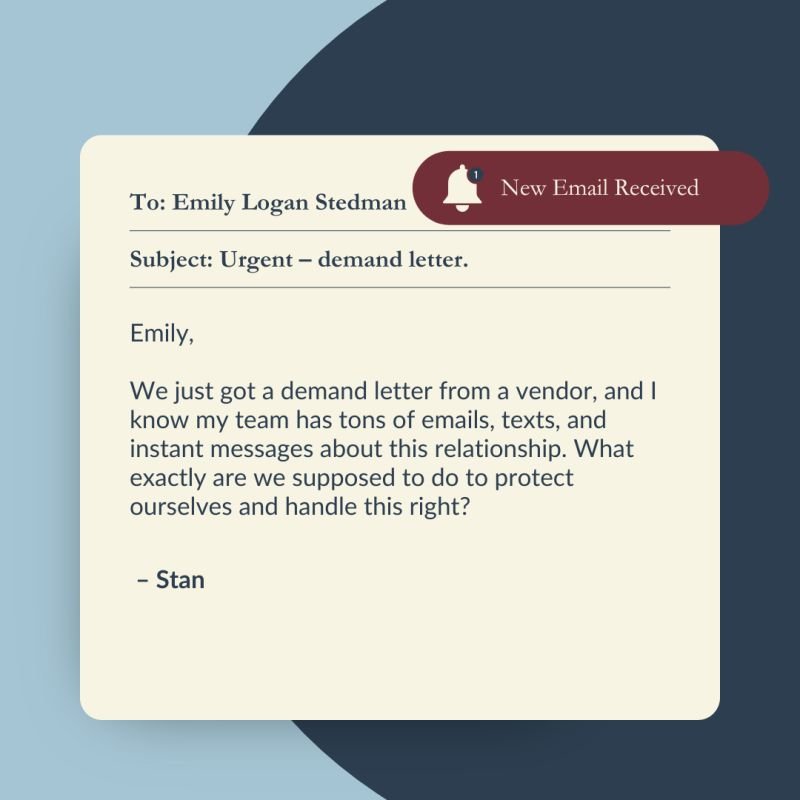
Hold the docs.
When a dispute pops up, timely responding (and negotiating) is key, but document retention is just as critical.
If you're an email and internal-messaging based company (like most of us are these days), you should avoid:
● Assuming “knowing where the documents are” is enough
● Hoping IT or your team will “just handle it”
● Letting automatic deletion or routine clean-up keep running
● Waiting until a complaint is filed to get your house in order
Instead:
● Understand that the moment you get a demand letter (or even anticipate a dispute), your duty to preserve evidence kicks in. That means emails, texts, Slack/Teams messages, calendar invites, attachments, files, and more.
● Have counsel draft a clear litigation hold notice to everyone who touched this vendor/client/contract. Spell out what to preserve, how to do it, and who to contact with questions.
● Review and suspend any automatic deletion policies. Make sure IT and every relevant witness (or “document custodian”) receives the litigation hold notice and knows exactly what to do (and not do)—and get written confirmation they’ve done it.
This must be a day-one focus.
And, it is a process you can build, now, when disputes aren't even around, so you're ready when a dispute inevitably crosses your desk.
Failing to preserve can mean sanctions (for clients and their counsel), lost evidence, or even losing your case.
Stan isn't alone in his questions.
As your counsel, it’s my job to walk you through this—because the consequences for getting it wrong are real, for you and for your lawyers.
So, when a dispute lands, don’t just “know where your documents are.” Know your protocols, stop the auto-delete, and make preservation a priority.
If you’re not sure your protocols are up to date, now’s the time to review them. Questions? Reach out.
Disclaimer: The views and opinions expressed here are solely my own and do not necessarily reflect the official policy or position of Husch Blackwell LLP or any other organization. Examples are generalized and do not reflect current client matters or firm positions.